


Sunday, January 23, 2011
Thursday, January 20, 2011
Upcoming Events at the Franco-American Heritage Center

Here is a listing of the Franco Center’s upcoming events.
The 2011 Celtic Series has been announced as well as other exciting events like the Mardi Gras with JimmyJo and the Jumbol'Ayuhs, Terry and the Telstars and the Rockin' Recons!
Piano Series # 3 - Henry Kramer
Piano Recital
Saturday, January 22 at 7:30 PM
$16 Reserved Seating; $14 Seniors; FREE for Students 21 and Under!
Click Here for More Information
F.A.B. Dance Showcase
FAHC & Bates College Dance Showcase
Saturday, February 12 at 7:30 PM
$14 General Admission; $12 Students & Seniors
Click Here for More Information
The Girls of LA
Pop – Vibrant Vocal Entertainment
Saturday, February 26 at 7:30 PM
$16 Reserved Seating; $14 Students and Seniors
Click Here for More Information
Irish Descendants
Celtic
Tuesday, February 22 at 7 PM
$20 General Admission; $10 Children 12 and Under
Click Here for More Information
More upcoming events:
Piano Series #4 – George Lopez – February 19, 2011
New York Funk Exchange – Funk Music – April 8, 2011


Tuesday, January 18, 2011

Friday, January 14, 2011
How Handwriting Trains the Brain
 Document created by Clarisse Bizot & Didier Carribou
 Extract from a child's writing notebook in first grade at L'Ecole Française du Maine
How Handwriting Trains the Brain
by G. Bounds-The Wall Street Journal-Oct 5, 2010
Ask preschooler Zane Pike to write his name or the alphabet, then watch this 4-year-old's stubborn side kick in. He spurns practice at school and tosses aside workbooks at home. But Angie Pike, Zane's mom, persists, believing that handwriting is a building block to learning.
She's right. Using advanced tools such as magnetic resonance imaging, researchers are finding that writing by hand is more than just a way to communicate. The practice helps with learning letters and shapes, can improve idea composition and expression, and may aid fine motor-skill development.
It's not just children who benefit. Adults studying new symbols, such as Chinese characters, might enhance recognition by writing the characters by hand, researchers say. Some physicians say handwriting could be a good cognitive exercise for baby boomers working to keep their minds sharp as they age.
Studies suggest there's real value in learning and maintaining this ancient skill, even as we increasingly communicate electronically via keyboards big and small. Indeed, technology often gets blamed for handwriting's demise. But in an interesting twist, new software for touch-screen devices, such as the iPad, is starting to reinvigorate the practice.
Most schools still include conventional handwriting instruction in their primary-grade curriculum, but today that amounts to just over an hour a week, according to Zaner-Bloser Inc., one of the nation's largest handwriting-curriculum publishers. Even at institutions that make it a strong priority, such as the private Brearley School in New York City, "some parents say, 'I can't believe you are wasting a minute on this,'" says Linda Boldt, the school's head of learning skills.
Recent research illustrates how writing by hand engages the brain in learning. During one study at Indiana University published this year, researchers invited children to man a "spaceship," actually an MRI machine using a specialized scan called "functional" MRI that spots neural activity in the brain. The kids were shown letters before and after receiving different letter-learning instruction. In children who had practiced printing by hand, the neural activity was far more enhanced and "adult-like" than in those who had simply looked at letters.
"It seems there is something really important about manually manipulating and drawing out two-dimensional things we see all the time," says Karin Harman James, assistant professor of psychology and neuroscience at Indiana University who led the study.
Adults may benefit similarly when learning a new graphically different language, such as Mandarin, or symbol systems for mathematics, music and chemistry, Dr. James says. For instance, in a 2008 study in the Journal of Cognitive Neuroscience, adults were asked to distinguish between new characters and a mirror image of them after producing the characters using pen-and-paper writing and a computer keyboard. The result: For those writing by hand, there was stronger and longer-lasting recognition of the characters' proper orientation, suggesting that the specific movements memorized when learning how to write aided the visual identification of graphic shapes.
Other research highlights the hand's unique relationship with the brain when it comes to composing thoughts and ideas. Virginia Berninger, a professor of educational psychology at the University of Washington, says handwriting differs from typing because it requires executing sequential strokes to form a letter, whereas keyboarding involves selecting a whole letter by touching a key.
She says pictures of the brain have illustrated that sequential finger movements activated massive regions involved in thinking, language and working memory—the system for temporarily storing and managing information.
And one recent study of hers demonstrated that in grades two, four and six, children wrote more words, faster, and expressed more ideas when writing essays by hand versus with a keyboard.
Even in the digital age, people remain enthralled by handwriting for myriad reasons—the intimacy implied by a loved one's script, or what the slant and shape of letters might reveal about personality. During actress Lindsay Lohan's probation violation court appearance this summer, a swarm of handwriting experts proffered analysis of her blocky courtroom scribbling. "Projecting a false image" and "crossing boundaries," concluded two on celebrity news and entertainment site hollywoodlife.com. Beyond identifying personality traits through handwriting, called graphology, some doctors treating neurological disorders say handwriting can be an early diagnostic tool.
"Some patients bring in journals from the years, and you can see dramatic change from when they were 55 and doing fine and now at 70," says P. Murali Doraiswamy, a neuroscientist at Duke University. "As more people lose writing skills and migrate to the computer, retraining people in handwriting skills could be a useful cognitive exercise."
In high schools, where laptops are increasingly used, handwriting still matters. In the essay section of SAT college-entrance exams, scorers unable to read a student's writing can assign that portion an "illegible" score of 0.
Even legible handwriting that's messy can have its own ramifications, says Steve Graham, professor of education at Vanderbilt University. He cites several studies indicating that good handwriting can take a generic classroom test score from the 50th percentile to the 84th percentile, while bad penmanship could tank it to the 16th. "There is a reader effect that is insidious," Dr. Graham says. "People judge the quality of your ideas based on your handwriting."
Handwriting-curriculum creators say they're seeing renewed interest among parents looking to hone older children's skills—or even their own penmanship. Nan Barchowsky, who developed the Barchowsky Fluent Handwriting method to ease transition from print-script to joined cursive letters, says she's sold more than 1,500 copies of "Fix It … Write" in the past year.
Some high-tech allies also are giving the practice an unexpected boost through hand-held gadgets like smartphones and tablets. Dan Feather, a graphic designer and computer consultant in Nashville, Tenn., says he's "never adapted well to the keypads on little devices." Instead, he uses a $3.99 application called "WritePad" on his iPhone. It accepts handwriting input with a finger or stylus, then converts it to text for email, documents or Twitter updates.
And apps are helping Zane Pike—the 4-year-old who refused to practice his letters. The Cabot, Ark., boy won't put down his mom's iPhone, where she's downloaded a $1.99 app called "abc PocketPhonics." The program instructs Zane to draw letters with his finger or a stylus; correct movements earn him cheering pencils.
"He thinks it's a game," says Angie Pike.
Gwendolyn Bounds The Wall Street Journal-Oct 5, 2010
Thursday, January 13, 2011
L' hiver dans la plaine - Verlaine
 Paul-Marie Verlaine (30 March 1844 – 8 January 1896) was a French poet associated with the Symbolist movement. He is considered one of the greatest French poets of all time.
The poem by Verlaine that the 4th, 5th and 6th graders are learning:
L’HIVER DANS LA PLAINE
Dans l’interminable
Ennui de la plaine,
La neige incertaine
Luit comme du sable.
Le ciel est de cuivre
Sans lueur aucune.
On croirait voir vivre
Et mourir la lune.
Comme des nuées
Flottent gris les chênes
Des forêts prochaines
Parmi les buées.
Le ciel est de cuivre
Sans lueur aucune.
On croirait voir vivre
Et mourir la lune.
Corneille poussive,
Et vous, les loups maigres,
Par ces bises aigres
Quoi donc vous arrive ?
Dans l'interminable
Ennui de la plaine,
La neige incertaine
Luit comme du sable.
Paul VERLAINE
Sunday, January 9, 2011

Saturday, January 8, 2011
La galette des rois


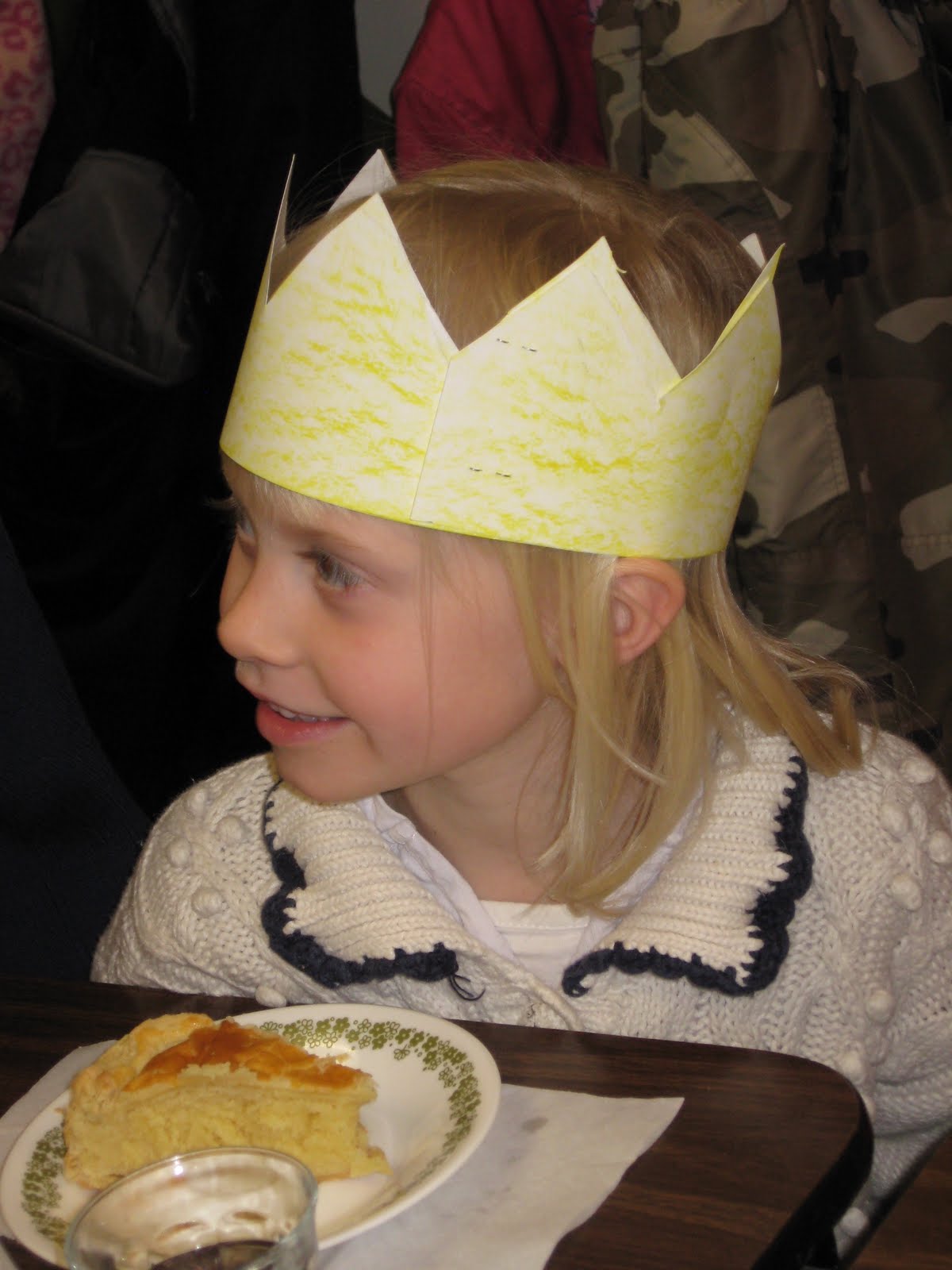


“La galette des Rois” (the cake or "wafer" of the Kings) is a cake celebrating the Epiphany and traditionally sold and consumed a few days before and after January 6th. In modern France, the cakes can be found in most bakeries during the month of January.
A figurine, “la fève”, which can represent anything from a car to a cartoon character, is hidden in the cake and the person who finds the trinket in their slice becomes king for the day. Originally, “la fève” was literally a broad bean (fève), but were replaced in 1870 by a variety of figurines made out of porcelain. These figurines have become popular collectibles and can often be bought separately.
A special thanks to Emilia, who prepared the galette with the ingredients that Beth and Willy brought back from France and found porcelain figurines. The celebration was enjoyed by all. To ensure a random distribution of the cake shares, several students placed themselves under the table and named the recipient of the cake slice indicated by Emilia and Elodie LeNezet-Soule.


Playground Updates

 The new playground has been delivered to Freeport and is currently being assembled at Freeport Services warehouse. Special thanks to Doug Piehl and his talented crew for their generous assistance with this project. Children from the South-Freeport community will enjoy the tree-house playground for years to come. The School is looking for tax-deductible donations towards this project. Any contribution, large or small will make a difference.
To make a donation, please go to the School's website or click here to download the donation form:
http://www.efdm.org/pages/giving_donate.html
Thank you for your support!!
Friday, January 7, 2011
New additions to the school library


Martine is the title character in a series of books for children written in French by the Belgians Marcel Marlier and Gilbert Delahaye. and edited by Casterman. The first one, Martine à la ferme (Martine At the Farm), was published in 1954, followed by over 50 other books, which have been translated into many different languages.
The school library now has 30 stories of Martine on CD so that parents and children can read along to these wonderful books together. The illustrations are beautiful, and each book focuses on a specific topic, rich in vocabulary. For example, when Martine goes to ride a pony, dances ballet, goes to the pool for a swim lesson, or goes camping, a child learns all of the rich vocabulary associated with that topic in context through the story. Please check them out, we're sure you and your child will enjoy them!
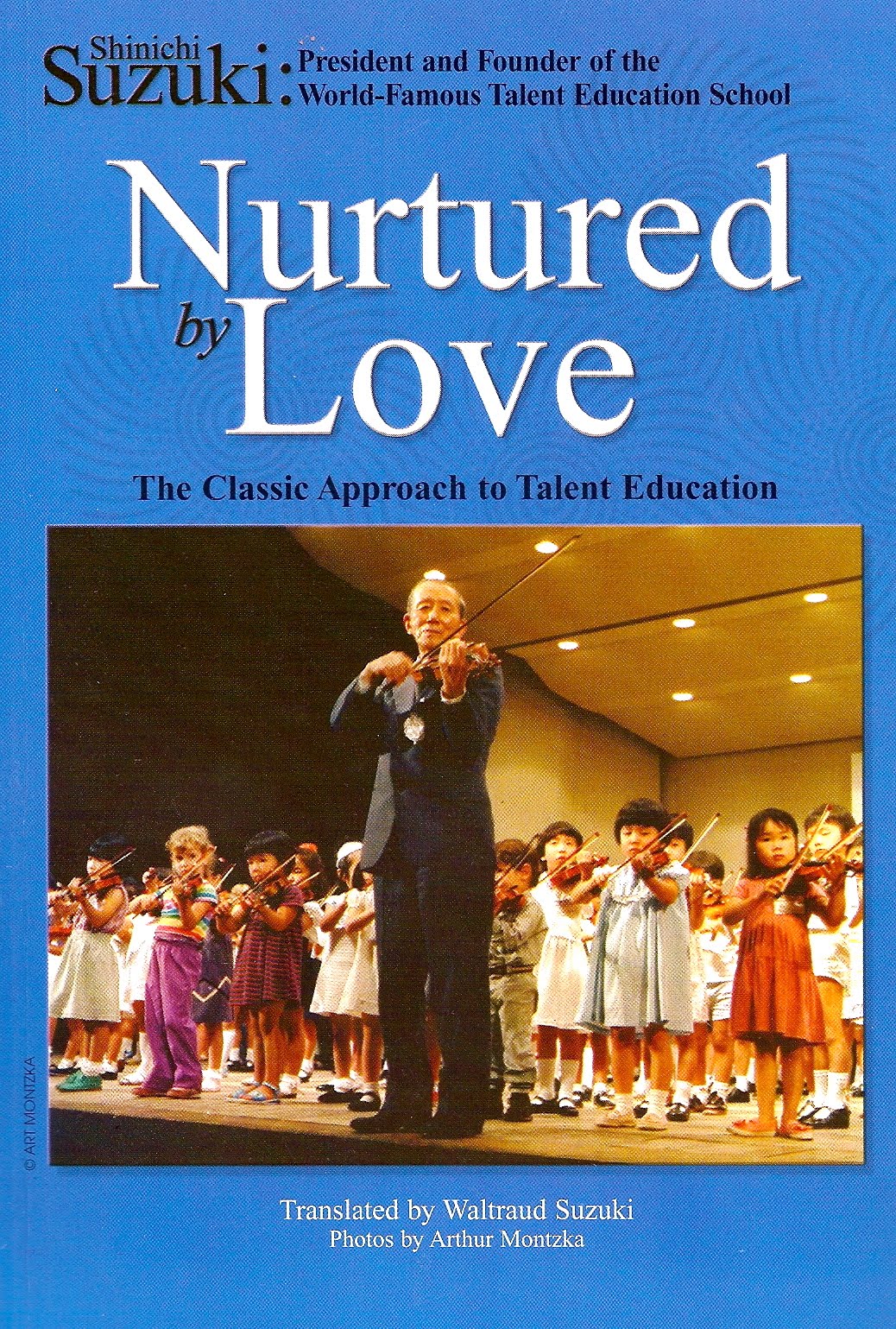
Dr. Suzuki's book "Nurtured by Love" provides a wonderful insight into the method. Below you will find a few excerpts. Thanks to Dee Dee Oehrtmann for suggesting this book be made available to parents considering Suzuki.
Oh-why, Japanese children can all speak Japanese! The thought suddenly struck me with amazement. In fact, all children throughout the world speak their native tongues with the utmost fluency. Any and every Japanese child- all speak Japanese without difficulty. Does that not show a starling talent? How, by what means, does this come about? I had to control an impulse to shout my joy over this discovery. This happened about thirty years ago, when I was thirty three or thirty fours old. Following up the thought that stuck me so forcibly on that day, and trying to find a solution, soon became the basic purpose of my life.
How does this surprising fact come about?
The father asked me to teach his son violin. At the time I didn’t know how to train such a small child, or what to teach him. I didn’t have such experience. What kind of violin training would be good for a four-year old? I thought about it from morning to night. The answer come from my discovery.
At that time, three of my brothers and I had just formed the Suzuki Quartet. One day, when we were practicing at the house of my younger brother, it hit me like a flash: all Japanese children speak Japanese! This thought struck me like a flash of light in a dark night. Since they all speak Japanese so easily and fluently, there must be a secret; and this must be training. Indeed, all children everywhere in the world are brought up by perfect educational method: their mother tongue. Why not apply this method to other faculties? I felt I had made a tremendous discovery. If a child cannot do his arithmetic, it is said that his intelligence is below average. Yet he can speak the difficult Japanese language – or his own native language – very well. Isn’t this something to ponder and think about? In my opinion, the child who cannot do arithmetic is not below the average in intelligence; it is the educational system that is wrong. His ability or talent simply has not been developed properly. It is astonishing that no one discovered this before, although the situation clearly has existed throughout human history.
Ability training is the secret
1. If the mother-tongue method of education were used in schools today, the results would far surpass those obtained by present methods. For instance, we often hear: “Here is a child who is not very bright; he was born with low intelligence.” But how do we account for the splendid capacity of children to speak Japanese? Do we search for a better method of training? Furthermore, a child is judged only from five or six years of age on. Nobody seems to care what happened before – what kind of education the child had from early infancy.
2. All children skillfully reared reach a high educational level but such rearing must start from the day of birth. Here, to my mind, lies the key to the fuller development of man’s potentials and abilities.
When I was asked to teach four-year-old Toshiya, I thought – and kept thinking – How? Finally the mother-tongue method occurred to me and I felt that it contained all that was necessary. For thirty years now I have been pleading with people to believe that all children can be well educated, and not to turn away those who drop behind in learning. I named my method Talent Education, and began an educational movement in which children dropping behind or struggling to get along are not turned away. The day of my startling discovery became for me the starting point in my search for human potentials. And how did I fare? With glances back at the past and full of hope for the future, I would like to tell the story.
Adult education
L’Ecole Française du Maine offers multiple options for adults seeking to improve their speaking and writing skills, or simply trying to keep up with their children! For more information, please call (207) 865 3308.
Group Classes are starting soon!
A session of 15 weekly classes that will meet from 6pm to 7:30pm. The curriculum consists of oral and written comprehension, and oral and written expression. The French textbook “Campus” and workbook will be required and can be purchased through EFDM. Classwork will cover: grammatical points with explanations and application exercises, vocabulary, phonetics and repetition of different sounds, conversation and practice of dialogue between the students, and cultural experience.
Group classes are offered at three different levels:
Beginner 1: On Mondays: first class on January 24, 2011
Beginner 2: On Tuesdays: first class on February 1, 2011
Beginner 3: On Tuesdays: first class on February 1, 2011
Advanced 1: On Mondays: first class on January 24, 2011
Cost: $375 per person, or $700 a couple.
Exposition des GS-CP:


The K-1 class children are currently exhibiting their "cameleon" artwork in the hallway of the school.
They were all given a small piece of paper with a design. They glued it on a sheet of paper. Then they used markers to continue the original design, expand it, and ultimately hide it within their artwork. When they were finished, they used black paint to cover any white space remaining.
Can you find the original design?
Wednesday, January 5, 2011
French Film Festival Offers Web Version
Cineastes won’t have to leave their computers to see the work of emerging French filmmakers.
UniFrance, a government-sponsored association of French Film industry professionals, in partnership with AlloCiné, an online Paris film directory, have organized a new online event called My French Film Festival and are offering it around the world for two weeks starting Jan. 14. Featuring 10 full-length films and 10 shorts, all recently released in France by emerging directors, the festival will make them available individually or as a group. Visitors can go to myfrenchfilmfestival.com to stream a feature film for $2.60; a short for $1.30 or the entire slate for $18.40. The festival will be judged and voted on by the public, bloggers and critics, with the winner receiving a noncash award to be announced at the end of the festival, on Jan. 29.
UniFrance, a government-sponsored association of French Film industry professionals, in partnership with AlloCiné, an online Paris film directory, have organized a new online event called My French Film Festival and are offering it around the world for two weeks starting Jan. 14. Featuring 10 full-length films and 10 shorts, all recently released in France by emerging directors, the festival will make them available individually or as a group. Visitors can go to myfrenchfilmfestival.com to stream a feature film for $2.60; a short for $1.30 or the entire slate for $18.40. The festival will be judged and voted on by the public, bloggers and critics, with the winner receiving a noncash award to be announced at the end of the festival, on Jan. 29.
Friday, December 17, 2010


Thursday, December 16, 2010
Les enfants font la cuisine!


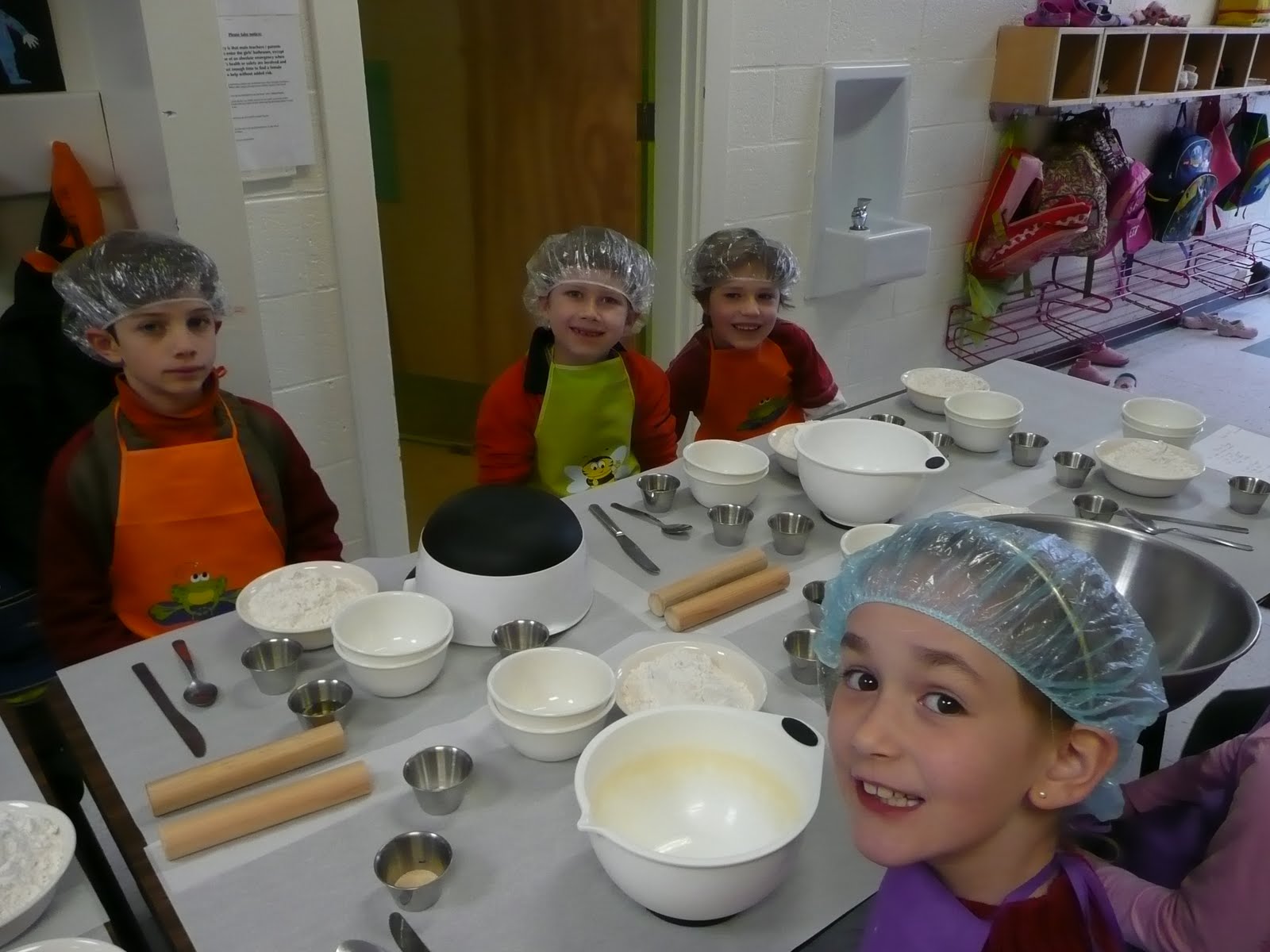


During the past two weeks Emilia organized different cooking activities for the children.
On Wednesday December 8 the Pre-K and K-1 classes made cookies. They learned the names of the ingredients and helped Emilia to knead the dough. Then, they rolled it out and used cookie cutters to make cookies of various shapes: hands, feet, stars, lobsters, moose, etc. When they were cooked, the children did a wonderful job decorating them with colored frosting. It was hard not to eat them right away...
On Wednesday December 15 the children of grades 2, 3, 4, 5 and 6 made lunch for everyone at school! Emilia taught them how to make pizza dough. They added their favorite toppings and Emilia cooked them for lunch. Some of them were even shaped into hearts! For dessert, we had the chocolate cupcakes they had decorated. Everything turned out to be delicious, and everyone had a lot of fun!
Tuesday, December 14, 2010
La chorale des grands:
Le Petit cheval blanc - G. Brassens
Un Autre monde - Téléphone
Oh Hé Hein Bon! - Nino Ferrer
Vive le vent!
Please click 'play' on the different videos to view the wonderful performance of 'La chorale des grands' at the show of December 13.
La chorale des petits:
Mon petit lapin
Quand je me promène dans la forêt - H. Dès
Y' avait des gros crocodiles...
Rock' n Roll des gallinacées
Quand je me promène dans la forêt - H. Dès
Y' avait des gros crocodiles...
Rock' n Roll des gallinacées
Please click 'play' on the different videos to view the performance of 'La chorale des petits' during the show of December 13, 2010.
Bravo les artistes!
Bravo les artistes!
Monday, December 13, 2010
School performance of December 13
Spectacle du 13 décembre 2010 - Programme:
Band – 4/5/6th grade class (Linda Vaillancourt)
Mozart Melody
Jingle Bells - Traditional
Chorale - Pre-K and K-1 classes (Clarisse Bizot & Scott Vaillancourt)
Mon petit lapin - Children’s song
Quand je me promène au fond de la forêt - Henri Dès
Y’avait des gros crocodiles… - Children’s song
Rock’ n Roll des gallinacées - Children’s song
Classe de GS/CP – K-1 class (Clarisse Bizot & Stéphanie Looten-Caceres)
La leçon de Rock’ n roll / Rock’ n Roll lesson
Chorale - K-1 class (Clarisse Bizot & Scott Vaillancourt)
J’entends le loup, le renard et la belette - Folk song from Brittany
Classe de PS/MS – pre-K class (Valérie Legentil & Laura Marin)
Danses bretonnes - Traditional dance from Brittany
Classe de CE1 et CE2 – Grades 2 & 3 (Didier Carribou)
La Route du Rhum - Presentation
Classe de CM1, CM2 et 6ème – Grades 4, 5 & 6 (Elodie Le Nezet-Soule)
Caen - Skit from Raymond Devos
Chorale – grades 2 through 6 (Elodie Le Nezet-Soule, Scott Vaillancourt)
Le Petit cheval blanc - Georges Brassens
Un Autre monde - Téléphone
Oh Hé Hein Bon! - Nino Ferrer
Vive le vent - Traditional song
Wednesday, December 8, 2010
World Music Holiday Concert with the Kolosko Dimow Duo and Naia
Sunday, Dec. 12th, 7pm - $12/$10
Trinity Episcopal Church - 580 Forest Ave, Ptld.
This is going to be a very special evening. Naia is the exquisite duo of Nicole Rabata on Celtic flute with Danielle Langord on harp. Their repertoire is varied and all extremely beautiful. The Kolosko Dimow duo will be drawing on our own varied repertoire with original compositions, music from Brazil, a little Klezmer and more. We're also going to join forces and play a few beautiful and rare tunes as a quartet. This is a concert in holiday season, more than a concert of holiday music, but we will be playing a few well chosen holiday tunes from around the globe.
www.nathankolosko.com
www.naiamusic.com
The kolosko • dimow duo consists of the critically acclaimed composer/performers Nathan Kolosko (classical guitar), and Carl Dimow (flute and bass flute). Kolosko is an improviser and composer who frequently draws on world music traditions. Dimow tours internationally performing Klezmer music, and also performs jazz and middle eastern music. Their recordings, nostalgia (2007) & border crossings (2010), reflect this diversity, drawing on elements of classical music, world music and jazz. Their performances include original compositions and often feature the unique and beautiful combination of bass flute and guitar.
Naia Celtic Flute and Harp Duo features traditional Celtic music from Ireland, Scotland, Brittany, Scandinavia and Quebec along with their own traditionally inspired compositions. Rich harmonies blend with delicate melodies to create Naia's unique sound. They have appeared together and in various ensembles throughout the USA and on international stages, including performances in India, Sweden, Scotland, Ireland, France and England. They have also been heard on BBC Glasgow, French National Television and NPR Radio.
Naia Celtic Flute and Harp Duo features traditional Celtic music from Ireland, Scotland, Brittany, Scandinavia and Quebec along with their own traditionally inspired compositions. Rich harmonies blend with delicate melodies to create Naia's unique sound. They have appeared together and in various ensembles throughout the USA and on international stages, including performances in India, Sweden, Scotland, Ireland, France and England. They have also been heard on BBC Glasgow, French National Television and NPR Radio.
Monday, December 6, 2010
Reunion d'information sur les retraites
Séance d'Information sur les retraites françaises - Réforme 2010
Lundi 13 décembre 2010, 18h00 - 20h00
EN FRANCAIS / IN FRENCH. Réforme des retraites 2010, rachat de trimestres pour années à l'étranger (demande de rachat possible avant multiplication par 4 du coût au 1er janvier 2011 !) ou années d'études, règles de cumul emploi-retraite, il est important de connaître les règles et les paramètres qui permettent d'optimiser ses droits acquis dans les régimes français et de définir la date optimum pour faire valoir ses droits à la retraite.
Afin de nous informer et de nous éclairer sur ces sujets, nous avons invité Bruno Renardier, Directeur de la société Assistance Retraite, qui se spécialise dans l’établissement de bilan retraite et dans la prise en charge des démarches de liquidation de retraite, conseille et assiste ses clients en toute indépendance sur leurs droits à la retraite.
Déroulement de la réunion
18h Accueil des participants
18h15 - 20h Informations générales sur les règles des droits à la retraite (ensemble des régimes, régimes par annuité, régimes par points, incidence de la situation familiale, règles de réversion, carrières internationales, chômage et droits à la retraite, rachat de trimestres)
Réforme des retraites 2010
Règles à suivre pour optimiser ses droits
Réponses aux questions d’intérêt général
***
Lieu: L'Ecole Internationale de Boston - Church Hall
45 Matignon Road, Cambridge MA 02140 (map)
RSVP: assistant@faccne.org avant le 9 décembre. Gratuit et ouvert à tous. EN FRANCAIS / IN FRENCH.
***
Organisé par la FACCNE et Assistance Retraite avec le soutien de: Boston Accueil, UFE, le Consulat General de France à Boston, et l'Ecole Internationale.
Subscribe to:
Posts (Atom)